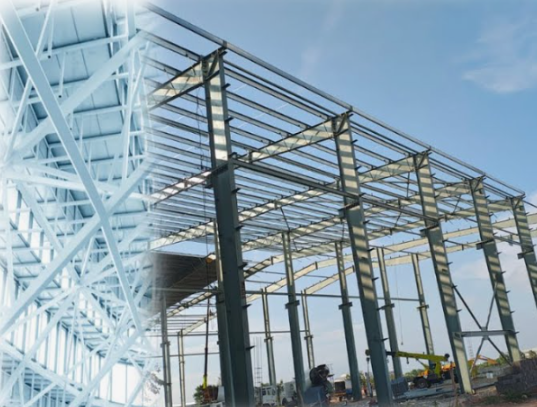
The field of civil engineering is rapidly shifting toward a more technology-driven and application-oriented approach. Traditional learning methods still form the foundation, but they are no longer sufficient on their own to meet industry expectations. Today, engineers are expected to understand real-time modeling, digital simulation, and advanced analysis tools used in modern construction workflows.
To stay relevant, many learners are now exploring structural design courses that combine theoretical understanding with practical software training. This approach helps students and professionals develop a deeper understanding of how structures behave under different conditions and how design decisions impact safety, efficiency, and cost.
Understanding Structural Design Thinking
Structural design is not only about calculations or formulas; it is about understanding how different forces interact within a building system. Every structure must withstand gravity, wind, seismic activity, and environmental conditions while maintaining stability and durability.
Modern engineers must think beyond static calculations and focus on performance-based design. This includes evaluating how materials respond under stress, how load paths distribute force, and how structural components work together as a system.
Through structured learning programs, learners develop the ability to interpret design challenges and convert theoretical concepts into practical engineering solutions.
Role of Digital Tools in Engineering Design
The integration of software tools has completely transformed civil engineering practices. One of the most widely used tools in this domain is ETABS, which is designed for structural modeling and analysis of buildings.
The use of ETABS software allows engineers to create detailed 3D models, apply multiple load conditions, and analyze structural behavior with high accuracy. It reduces manual effort and improves reliability in design outcomes.
By working with digital tools, engineers can test multiple design alternatives before finalizing construction decisions. This not only improves safety but also helps in optimizing material usage and reducing project costs.
Evolution of Civil Design Learning Methods
Engineering education has evolved significantly with the introduction of technology-based learning systems. Earlier, students relied mainly on textbooks and classroom lectures. Today, they have access to interactive simulations, digital labs, and software-based training environments.
Modern civil design courses focus on bridging the gap between academic theory and real-world applications. These programs help learners understand how design principles are implemented in actual construction projects.
Instead of memorizing concepts, students are encouraged to apply them through modeling exercises, structural simulations, and project-based learning activities. This practical approach enhances understanding and improves problem-solving ability.
Importance of Practical Design Exposure
Practical exposure plays a crucial role in developing engineering skills. Real-world construction projects involve complex challenges that cannot be fully understood through theory alone.
When learners work on simulated structural models, they gain insights into how buildings respond to different environmental and load conditions. They also learn how design decisions influence structural stability and performance.
This hands-on experience helps students build confidence and prepares them for professional roles where accuracy and efficiency are essential. It also encourages critical thinking, which is vital for solving engineering problems effectively.
Integration of Software in Design Learning
Modern engineering education increasingly incorporates software-based learning to enhance technical skills. Tools like ETABS, STAAD Pro, and other modeling applications are now essential components of structural training.
By using ETABS software, learners can visualize complex structural systems and understand how loads are transferred through beams, columns, and slabs. This visual learning approach makes it easier to grasp advanced engineering concepts.
Software integration also helps students simulate real construction scenarios, allowing them to experiment with different design configurations and observe their outcomes in a controlled environment.
Building Strong Analytical Skills in Engineers
Analytical thinking is one of the most important skills for civil engineers. It involves evaluating data, interpreting structural behavior, and making informed design decisions.
Structured learning programs that focus on structural design courses help learners develop this analytical mindset. Through continuous practice, students learn how to identify design flaws, optimize structures, and improve efficiency.
This skill is not only useful in academic projects but also plays a key role in professional engineering environments where precision and decision-making are critical.
Industry Relevance of Modern Design Training
The construction industry today demands engineers who are well-versed in both theory and technology. Employers prefer candidates who can work with digital tools, understand structural behavior, and contribute to project planning effectively.
Training programs that combine theoretical knowledge with software applications are highly valued in the industry. They prepare learners for real-world challenges such as structural optimization, cost estimation, and project execution.
Exposure to modern design practices ensures that engineers are ready to handle complex infrastructure projects with confidence and efficiency.
Career Growth Through Advanced Learning
Continuous learning is essential for long-term success in engineering careers. As construction technologies evolve, engineers must upgrade their skills regularly to stay competitive.
Knowledge of civil design courses provides a strong foundation for careers in structural analysis, architectural planning, construction management, and infrastructure development.
Professionals who invest in advanced training gain better job opportunities, higher responsibilities, and increased recognition in the industry. Their ability to combine design knowledge with software expertise makes them valuable assets in engineering teams.
Future of Structural Engineering Education
The future of civil engineering education lies in digital transformation and experiential learning. Virtual simulations, advanced modeling tools, and interactive design platforms are becoming standard components of training programs.
As technology continues to evolve, engineers will need to adapt to new tools and methodologies. The ability to work with digital design systems will become a fundamental requirement in the industry.
This shift highlights the importance of continuous learning and practical skill development in shaping successful engineering careers.
Conclusion
Modern engineering careers require a strong combination of theoretical knowledge, practical exposure, and software proficiency. Learning through courses, gaining experience in design courses, and working with ETABS software helps engineers build a strong technical foundation for real-world applications. This balanced approach also improves problem-solving ability and helps engineers adapt quickly to complex project requirements. Over time, it builds confidence to handle real construction challenges with accuracy and efficiency.
Platforms like Civilera support this learning journey by offering structured, industry-focused training that enhances design skills and prepares learners for advanced roles in the civil engineering field.