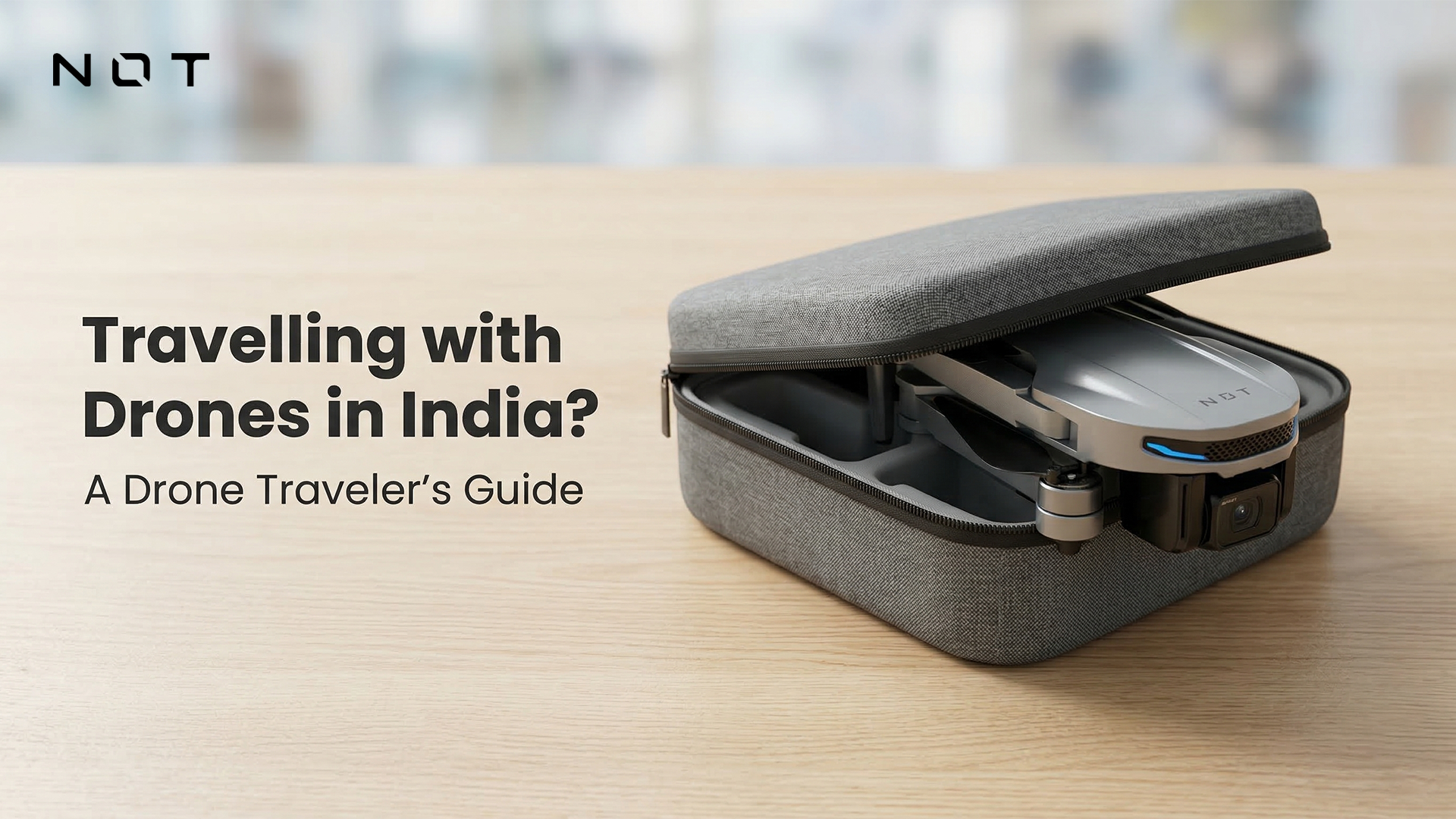
India is one of the most vibrant and exotic countries on the planet. From the golden dunes of Rajasthan to the emerald backwaters of Kerala, from the snow-capped Himalayas to the colourful streets of Old Delhi, every corner of this country looks like it was made to be filmed from above. No wonder more and more travellers are packing a camera drone right alongside their passports and sunscreen.
But before you launch your drone over a heritage fort or a misty valley, there’s some important groundwork to cover. Flying a drone in India comes with rules, zones, and responsibilities and knowing them is what separates a great experience from an expensive legal headache.
Here’s everything you need to know, laid out simply and clearly.
First Things First: India Does Have Drone Laws
India’s drone regulation came into place back in 2014 when the DGCA (Directorate General of Civil Aviation) laid down the first framework. Since then, things have evolved significantly for the better. The Drone Rules, 2021 and their 2022 amendments made the system more streamlined and accessible, especially for casual flyers and travellers.
The big takeaway? India takes drone operations seriously, but it’s not trying to stop you from flying; it just wants you to fly smart.
Know Your Drone’s Category Before You Travel
India classifies drones by weight, and your drone’s category determines what rules apply to you:
- Nano (≤ 250g): Fewest restrictions, no licence needed for non-commercial use
- Micro (250g – 2kg); Some restrictions; no licence for non-commercial personal use
- Small (2kg – 25kg): Requires full registration and certification
- Medium (25kg – 150kg): Heavy compliance requirements
- Large (>150kg): Commercial/industrial use only
Here’s where it gets exciting for travellers: the NOT Drones NOT ORO 4K and Nabhyan Pro 2.0 weighs under 250 grams, putting it firmly in the Nano category. That means no DGCA licence, no Remote Pilot Certificate, and significantly less paperwork, making it one of the most travel-friendly camera drones you can buy in India right now.
The Three Flying Zones in India (This Is Critical)
Before you take off anywhere, you need to know which flying zone you’re in. India divides its skies into three colour-coded zones:
- Green Zone: Open for flying up to 400 feet (120 metres). Most rural and open areas fall here. This is your happy place as a traveller.
- Yellow Zone: Restricted areas that require prior permission from air traffic authorities before flying. Plan before you’re near one.
- Red Zone: Absolute no-fly territory. This includes areas near airports, military installations, and other sensitive locations.
You can check which zone your travel destination falls in using the interactive airspace map on the Ministry of Civil Aviation’s website. Always do this before you arrive at a location, not after you’ve already set up your shot.
Do You Need a Licence or Certificate?
This depends on your drone and how you’re using it:
- Nano drones for personal, non-commercial use: No Remote Pilot Certificate (RPC) needed.
- Micro drones for personal use: Also exempt from RPC requirements.
- Any drone used commercially: You’ll need an RPC, which requires being between 18 and 65 years of age, having completed Class 10, and finishing a DGCA-approved training course.
- Most drones above nano/micro require a type certificate obtained through the Digital Sky Platform..
The Digital Sky Platform is India’s centralised system for drone registration, flight permissions, and airspace management. If your drone requires any paperwork, this is where you do it all.
What Happens If You Break the Rules?
Short answer: It’s costly and entirely avoidable.
Under Rule 50 of the Drone Rules, 2021, violations can result in fines of up to ₹1,00,000. Beyond the money, there are real concerns worth keeping in mind:
- Flying a camera drone over crowded areas without permission is considered a privacy violation.
- Unauthorised surveillance, even unintentional, creates security concerns
- Flying in Red Zones near airports or defence installations can escalate into criminal proceedings
None of this is meant to scare you. It’s just to underline that a two-minute check before flying can save you a world of trouble.
Practical Tips for Travelling with a Drone in India
Here’s a traveller-tested checklist to keep your aerial adventures smooth:
- Check the zone of every location on the Ministry of Civil Aviation airspace map before you fly
- Carry your drone’s documentation: purchase proof, spec sheet, and weight confirmation
- Fly during daylight only and always maintain direct visual contact with your drone
- Avoid flying over crowds, religious gatherings, government buildings, and wildlife reserves without proper permission
- Carry spare batteries: the NOT ORO’s 1600mAh battery and the Nabhyan’s 1600mAh pack are both available as standalone replacements on the NOT Drones website.
- Be respectful of locals: not everyone is comfortable being filmed, even from a distance.
- Never fly in bad weather; strong winds, rain, and low visibility are your drone’s worst enemies.
The Best Travel Drone for Indian Conditions
If you’re shopping for the right mini drone before your next trip, the NOT Drones lineup is worth a serious look. The Nabhyan Pro 2.0 is compact, nano-category light, and designed for travellers who want great footage without any hassle. For those ready to go all-in on content creation, the NOT ORO 4K offers a 2-axis gimbal, 4K camera, GPS, and up to 40 minutes of flight time.
Every drone and accessory in the NOT Drone’s collection is proudly Indian-made, backed by a reliable 365-day customer support system, and available with live online demos so you know exactly what you’re getting before checkout.
India Is Waiting to Be Seen from Above. So Do It Right
Flying a drone in India as a traveller is genuinely one of the most rewarding experiences you can add to a trip. The landscapes are extraordinary, the light is dramatic, and the perspectives you capture from above simply can’t be replicated from the ground.
Just do your homework, respect the rules, pick the right drone for your needs, and fly responsibly. The skies and the shots will reward you for it.