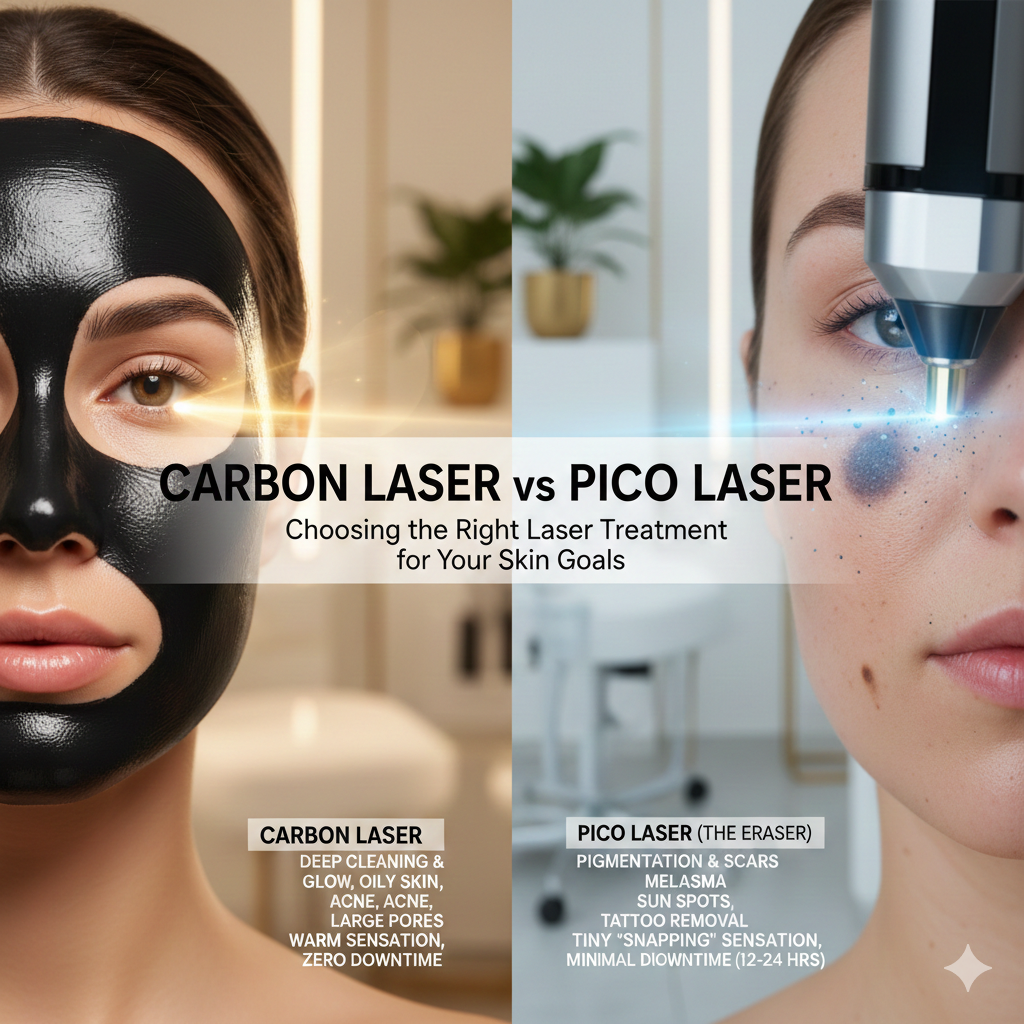
Laser-based skin treatments have become a trusted solution for addressing a wide range of concerns, from acne scars and pigmentation to enlarged pores, uneven texture, and dull skin. Among the most commonly used treatment methods are Carbon Laser and Pico Laser. While both are highly effective and widely used in modern cosmetic practice, they serve different purposes and are designed for different skin needs.
Rather than competing treatments, Carbon Laser and Pico Laser are best understood as targeted solutions, each excelling in its own way. This comparison will help you understand how they work, what concerns they address, and which option may be better suited to your skin goals.
Understanding the Core Difference Between Carbon Laser and Pico Laser
At a fundamental level, the difference lies in what each laser targets and how deeply it works.
Carbon Laser is primarily focused on surface-level skin concerns. It deeply cleanses the pores, reduces oil production, exfoliates dead skin cells, and corrects complexion. The results are often visible immediately, making it a popular choice for those seeking a quick glow with minimal recovery time.
Pico Laser, on the other hand, is designed for precision correction. It targets stubborn pigmentation, acne scars, and uneven tone using ultra-short pulses of energy. These pulses break pigment into tiny particles without causing damage to the surrounding skin, making Pico Laser particularly effective and safe for a wide range of skin tones.
Carbon Laser: A Targeted Solution for Oily and Acne-Prone Skin
Carbon Laser, also known as the Carbon Peel or Hollywood Peel, is especially beneficial for individuals struggling with oily skin, clogged pores, blackheads, and acne-prone conditions. The treatment involves the application of a carbon-based solution to the skin. This carbon penetrates the pores, binding to oil, debris, and impurities.
A laser is then passed over the skin, vaporising the carbon along with trapped dirt and dead skin cells. This process results in deep cleansing, gentle exfoliation, and a refreshed appearance.
Carbon Laser is well-suited for those managing:
- Excess oil production
- Blackheads and sebaceous filaments
- Congested or enlarged pores
- Mild acne and comedonal breakouts
- Dull or uneven surface texture
In addition to cleansing, Carbon Laser offers mild collagen stimulation, helping refine pores and improve early signs of ageing. Redness is usually minimal and fades within hours, allowing most people to return to normal activities the same day.
Pico Laser: Precision Treatment for Pigmentation and Skin Rejuvenation
Pico Laser is recognised for its ability to treat deeper and more persistent skin concerns, particularly pigmentation. It delivers ultra-short pulses of energy that shatter pigment particles without relying on heat. This makes it highly effective while reducing the risk of irritation or post-inflammatory hyperpigmentation.
Pico Laser is commonly used to address:
- Melasma and hormonal pigmentation
- Sunspots and freckles
- Post-acne marks
- Acne scars and uneven texture
- Fine lines and early signs of ageing
Beyond correcting pigmentation, Pico Laser stimulates collagen production at deeper skin levels, improving skin firmness and overall texture over time. Because the energy is non-thermal, it is well tolerated by sensitive skin and is considered safe for darker skin tones.
Key Differences in Approach, Not Effectiveness
While both treatments rejuvenate the skin, they differ in depth and primary focus.
Carbon Laser works at a superficial level, targeting oil, congestion, and surface dullness using nanosecond pulses combined with a carbon solution. Pico Laser works deeper to break down pigment and stimulate collagen without damaging surrounding tissue.
Both lasers support collagen, but in different ways. Carbon Laser encourages gentle collagen stimulation suitable for pore refinement and early ageing, while Pico Laser promotes deeper collagen production for scar reduction and long-term skin rejuvenation.
In terms of downtime, both treatments are convenient. Carbon Laser may cause mild redness for a few hours, while Pico Laser typically involves little to no visible recovery.
Can Carbon Laser and Pico Laser Be Used Together?
Yes, and in many cases, they complement each other extremely well. Carbon Laser prepares the skin by removing excess oil, bacteria, and debris from the surface. Pico Laser can then focus on deeper pigmentation, scars, and collagen stimulation.
When used as part of a broader skin rejuvenation plan, these lasers integrate seamlessly with other treatments such as microneedling for enhanced collagen production, HIFU for skin tightening, or Hydrafacial sessions to maintain hydration and barrier health. Treatment plans are often customised based on the needs of the skin, lifestyle, and long-term goals.
Personalised Care at SKIN111 Dubai
At SKIN111, the choice between Carbon Laser and Pico Laser is never about one being better than the other; it’s about selecting the right treatment for your skin’s unique needs. Whether your priority is controlling oil and congestion, correcting stubborn pigmentation, or maintaining long-term skin health, each laser serves a distinct and valuable role. Through personalised consultations and advanced technology, SKIN111 ensures every treatment plan is tailored to deliver balanced, effective, and confidence-boosting results.